
WAIT- Why Am I Talking
Plan and Joural for Explorations in Ecology Meetup – Week Nine

Note: The first 30+ posts in this blog are source material for an in-process book, Explorations in Ecology: Playful Science-Rich Outdoor Activities for Children and Their Adults. Here is the preface. The first field trip is Taking Education Outside. More recent posts are plans and reflections from Exploration in Ecology meetups I host for children and my current musings about ecological education.
Big Ideas for the course:
We are all in this together as members of a global ecosystem.
We are all remarkably similar to each other.
We are all remarkably different from each other.
It’s all about relationships!
Relationships in ecosystems tend to minimize harm and regenerate the system.
We industrial humans must relearn how to benefit rather than harm each other and our environment.
Activity Offerings
Check-In
Planting Sun-chokes
Sift soil
Tree Nature tag in yard
Edible evening primrose
Place where worms turn waste into soil
Penstemon
Apple tree – thinning apples
Cherry Tree – find pink cherries
Orchid
Vinca
Manzanita
Jefferies Pine
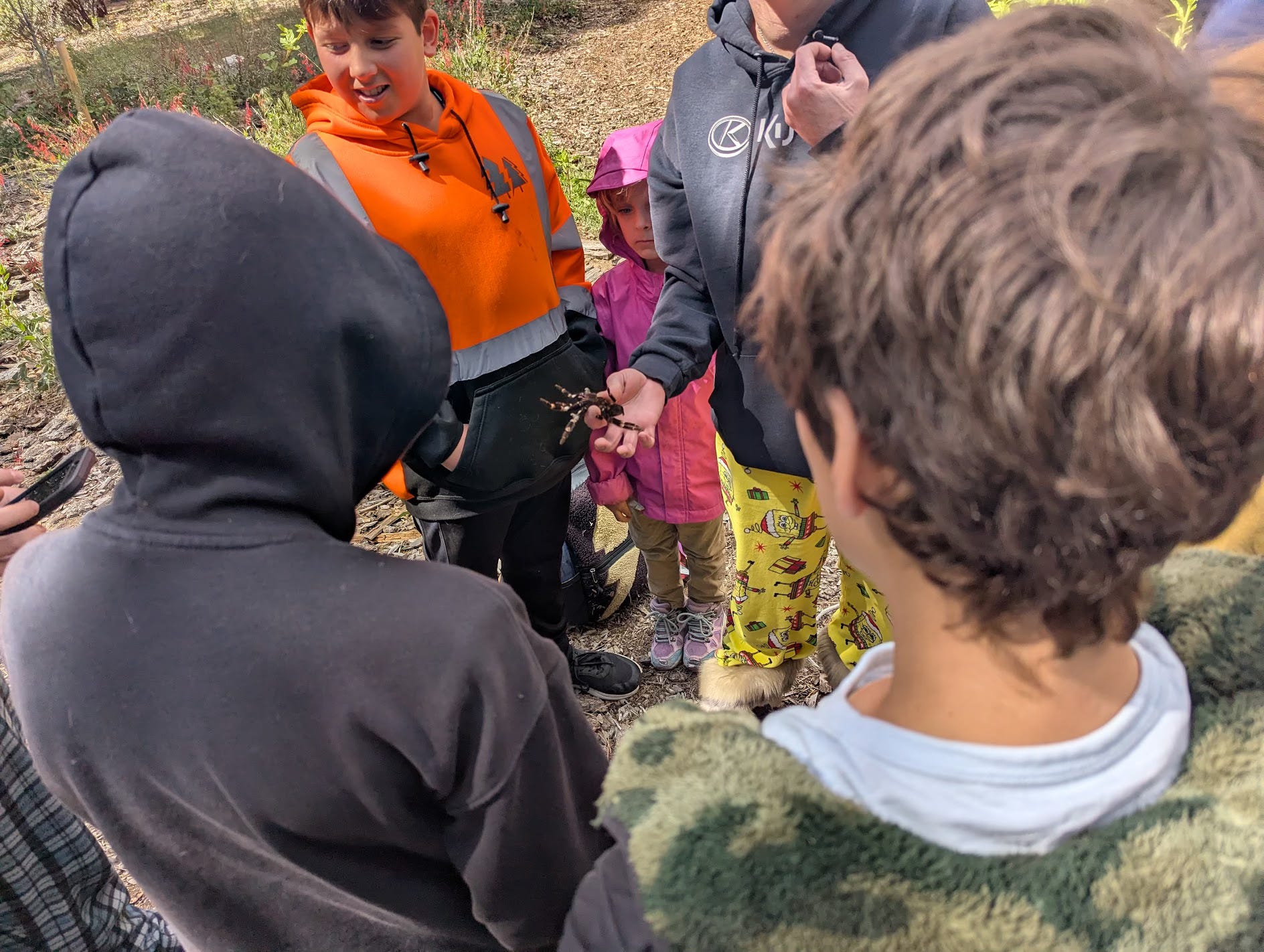
Jamie’s Falcon and Tarantula
Tree Nature tag in meadow
Find and eat a Lavoris flower
Find and check on exploding Mistletoe Berries
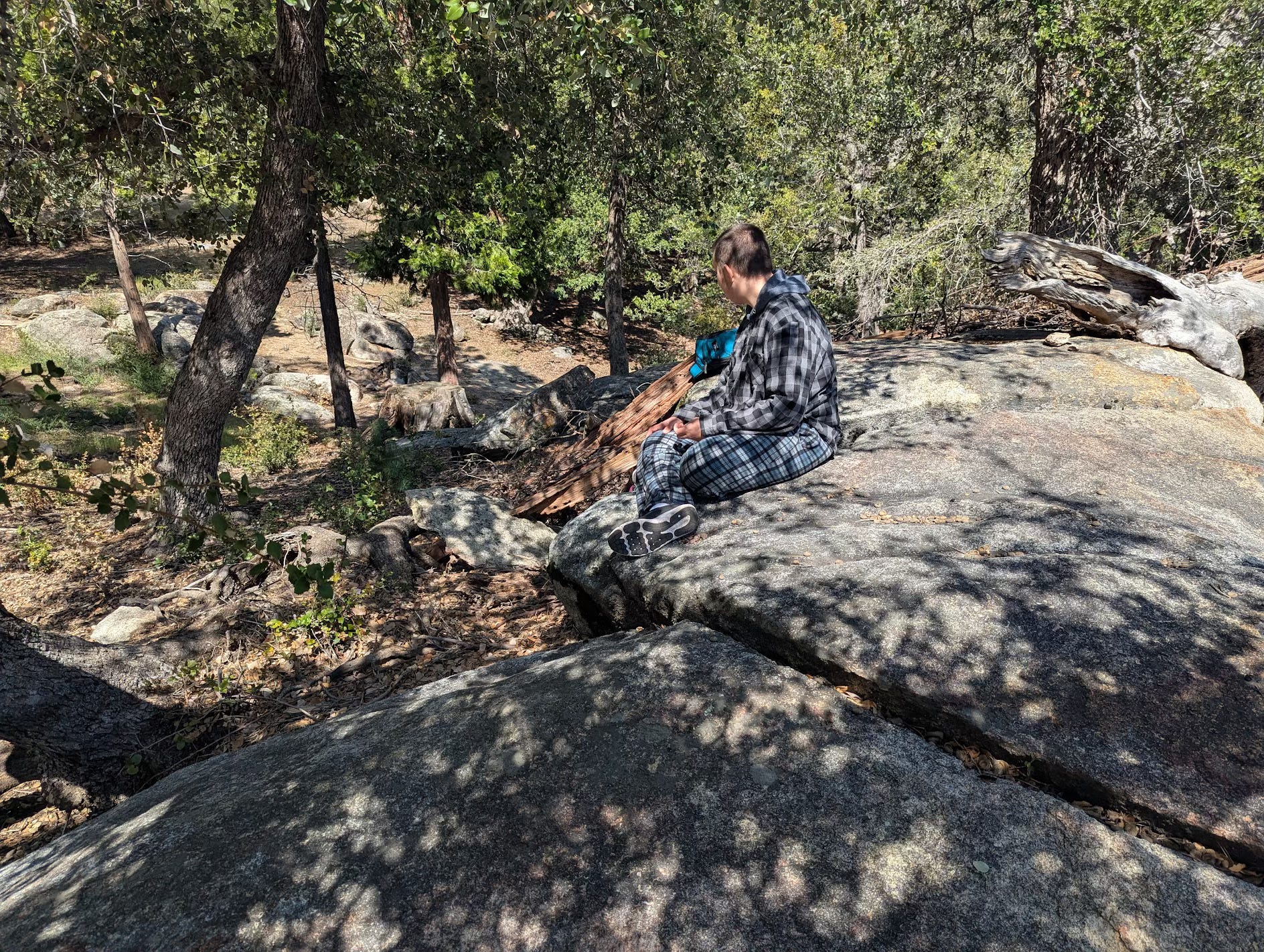
Hangout at Rainbow Rock and see what happens
Journal – Why Am I Talking (WAIT)
“WAIT” is one of my favorite acronyms. It reminds me to be intentional rather than reactive when I speak. Comedian, Craig Ferguson, frequently credited with popularizing the idea behind the acronym, unpacks this question into three sub-questions: Does this need to be said? Does it need to be said by me? Does it need to be said by me now? Lately I’ve been applying these questions to any guiding or environment nurturing that I do during our meetups. Does this intervention need to happen? Do I need to be the one taking this action? Do I need to make this intervention now?
Two things made this a special meetup: we had four visitors, and I misplaced my forest backup that always contains hand lenses, many knives, a variety of cordage, a hand trowel, and other goodies I bring along to support learning. Our guests included a drop-in child, my friend Jamie Lessie, and one of her tarantulas and her hunting partner Rue, a Harris’s hawk. I asked Jamie to get to our yard around 3:00 so the group could do circle and move some before needing to be settled and quiet when she arrived with Rue.
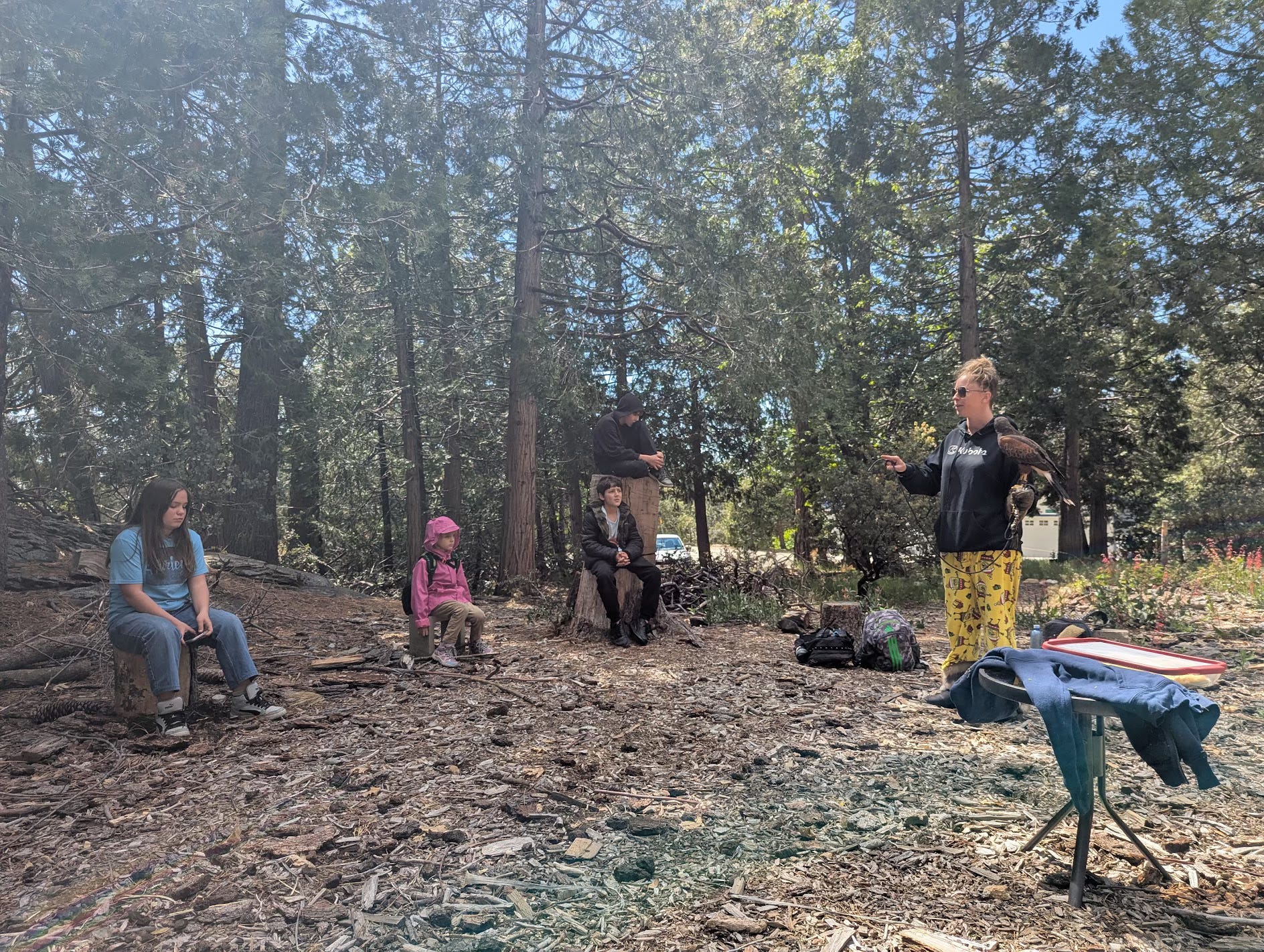
We had a great check-in, and I shared about our guests. We played nature tag in the yard, talked about and did a little thinning of our apple tree, planted sunchokes, and sifted more native soil to mix with worm castings to build up the bed where we planted the sunchokes.
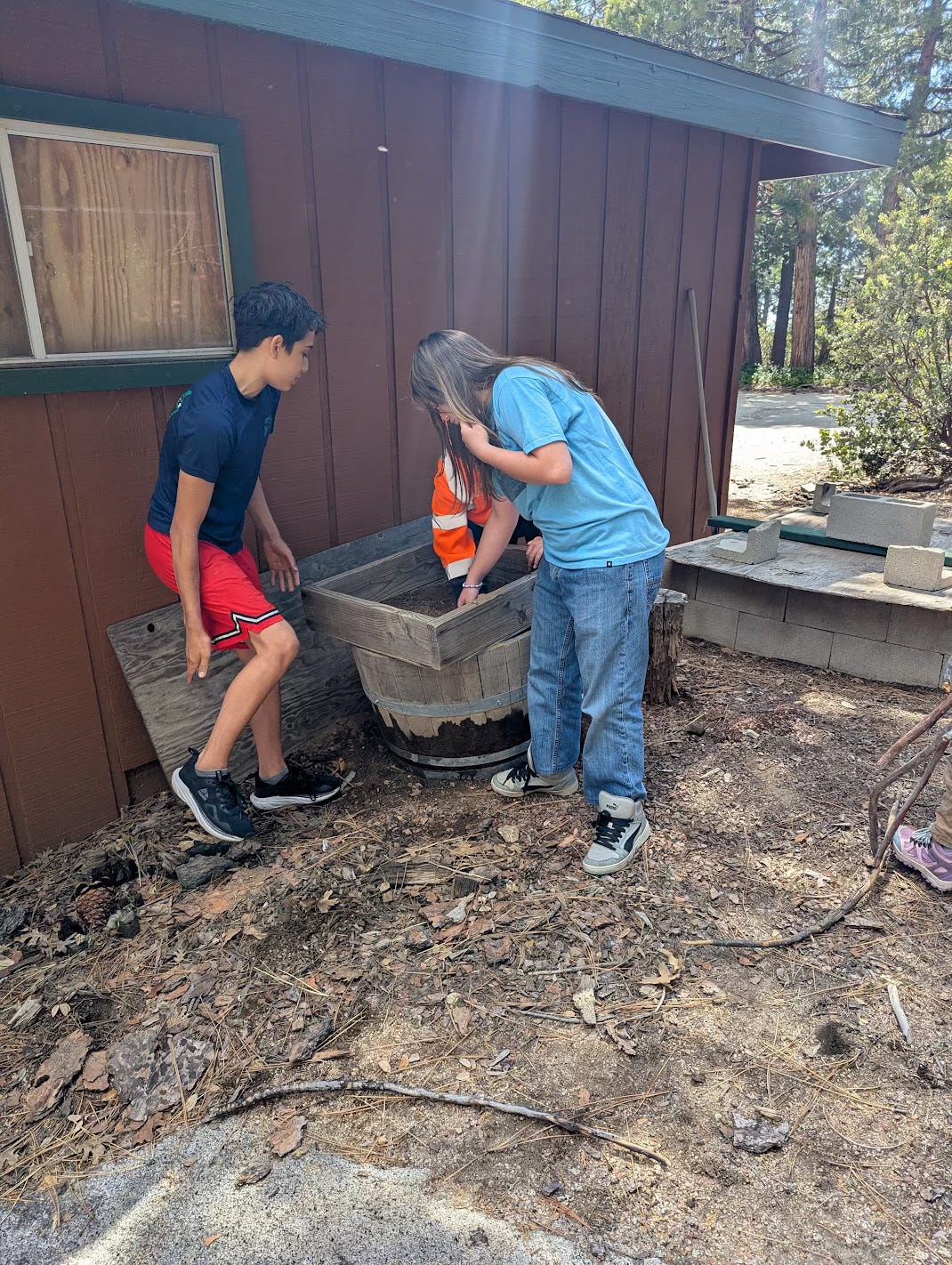
Jamie arrived around 3:00 and we got to see Rue and touch the tarantula Jamie brought. Jamie’s presentation was wonderful and folks, from our youngest to our adults (my wife Ann joined us in addition to my helper, Melissa) asked great questions and we all learned so much about Harris’s Hawk culture and their place in their ecosystem.
After Jamie’s wonderful interactive presentation, we headed to Rainbow Rock.
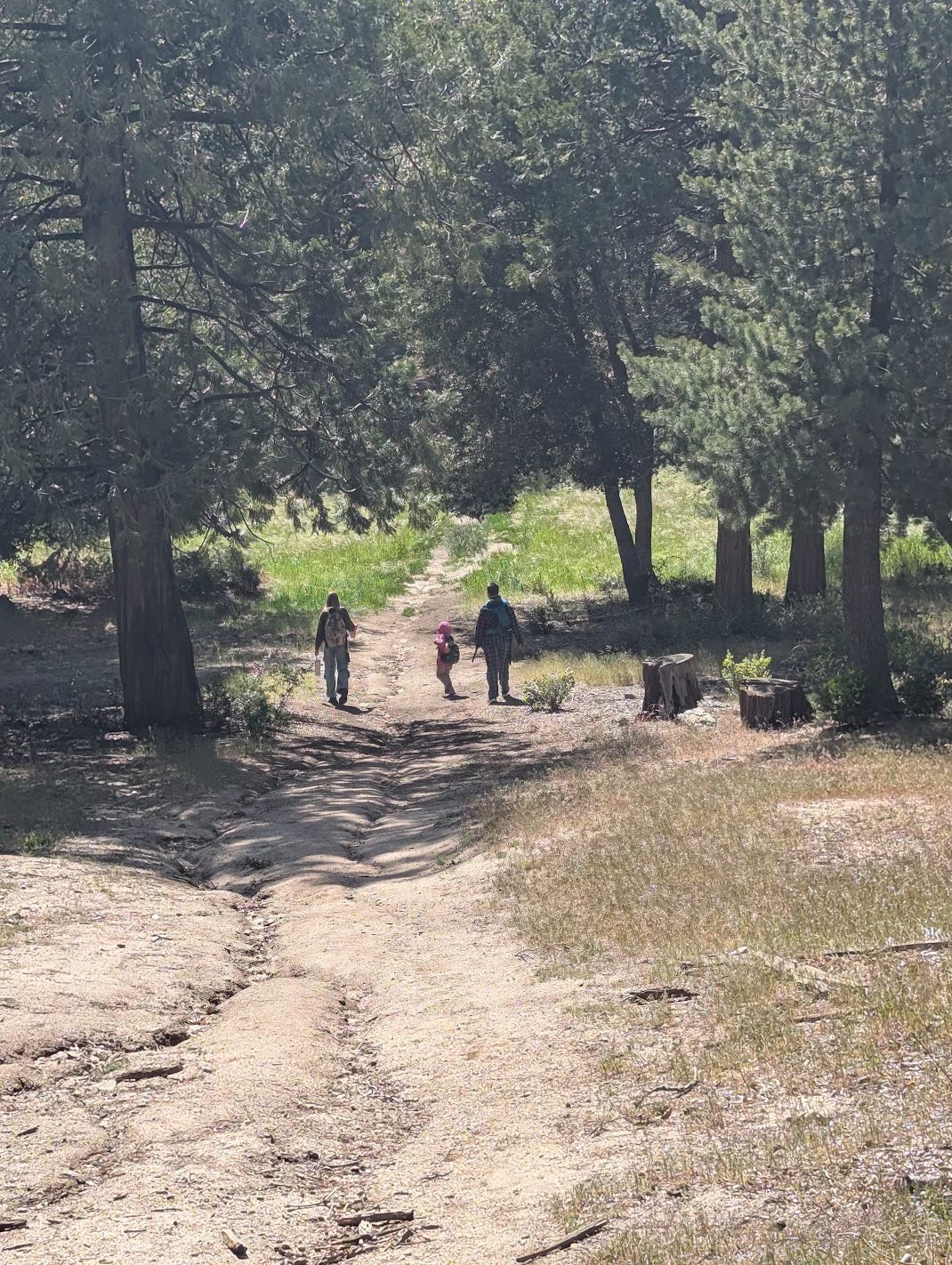
Without my forest bag there was no carving, working with cordage, or playing with hand lenses. What I discovered was that my bag of tools isn’t as essential of a learning support as I thought. Our youngest used a hard stick to carve on a soft stick.
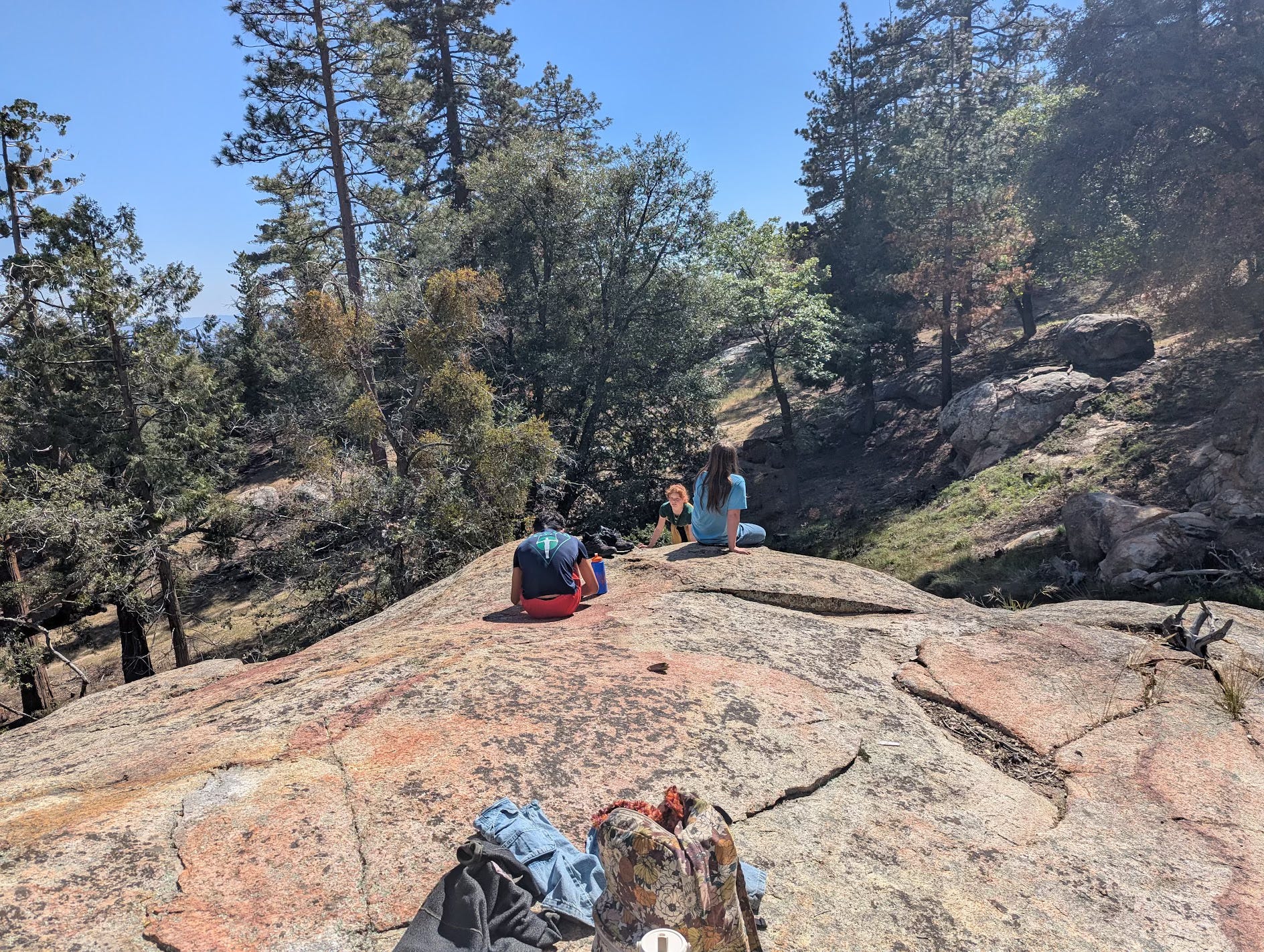
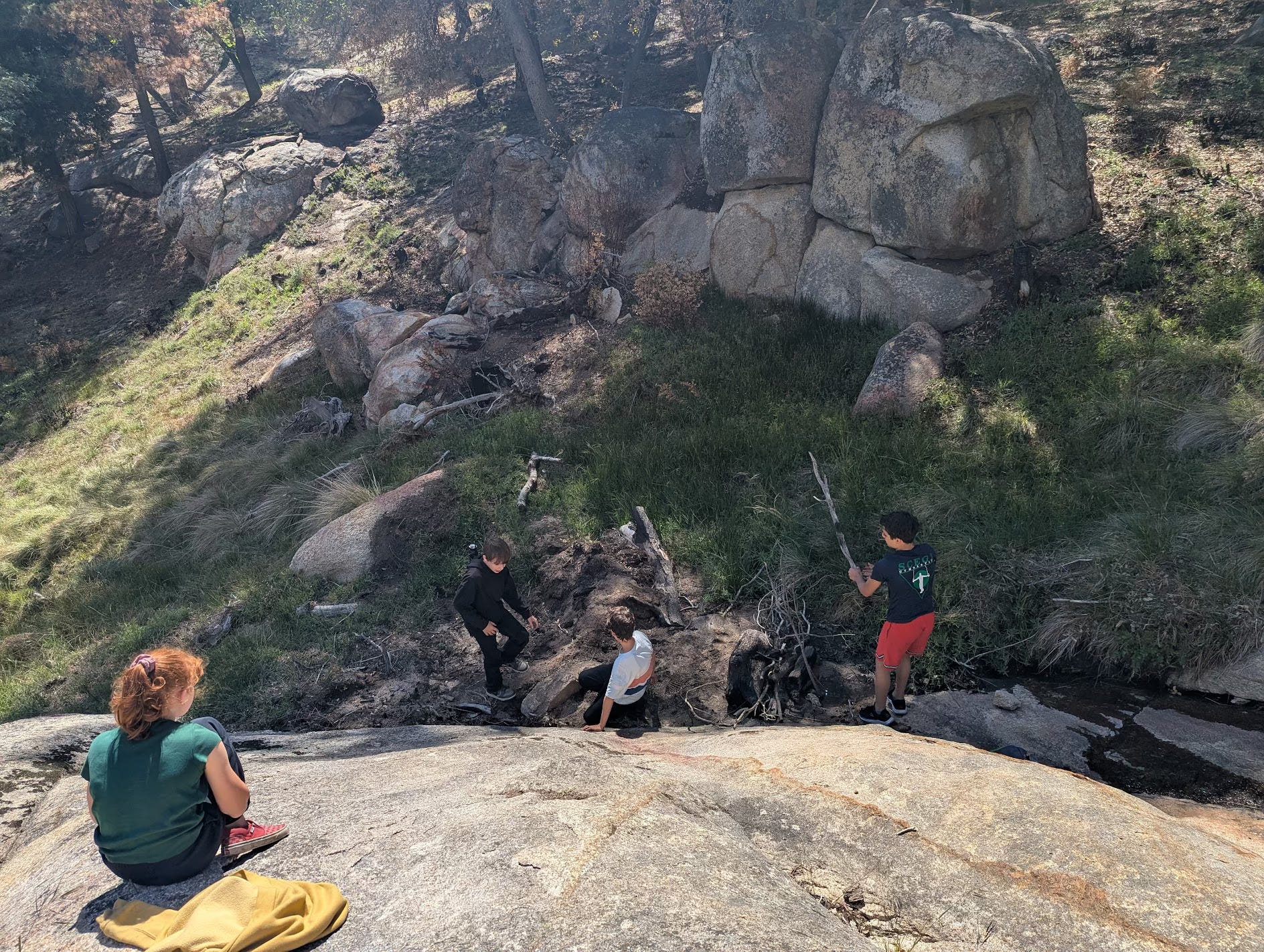
A group worked on building a dam.
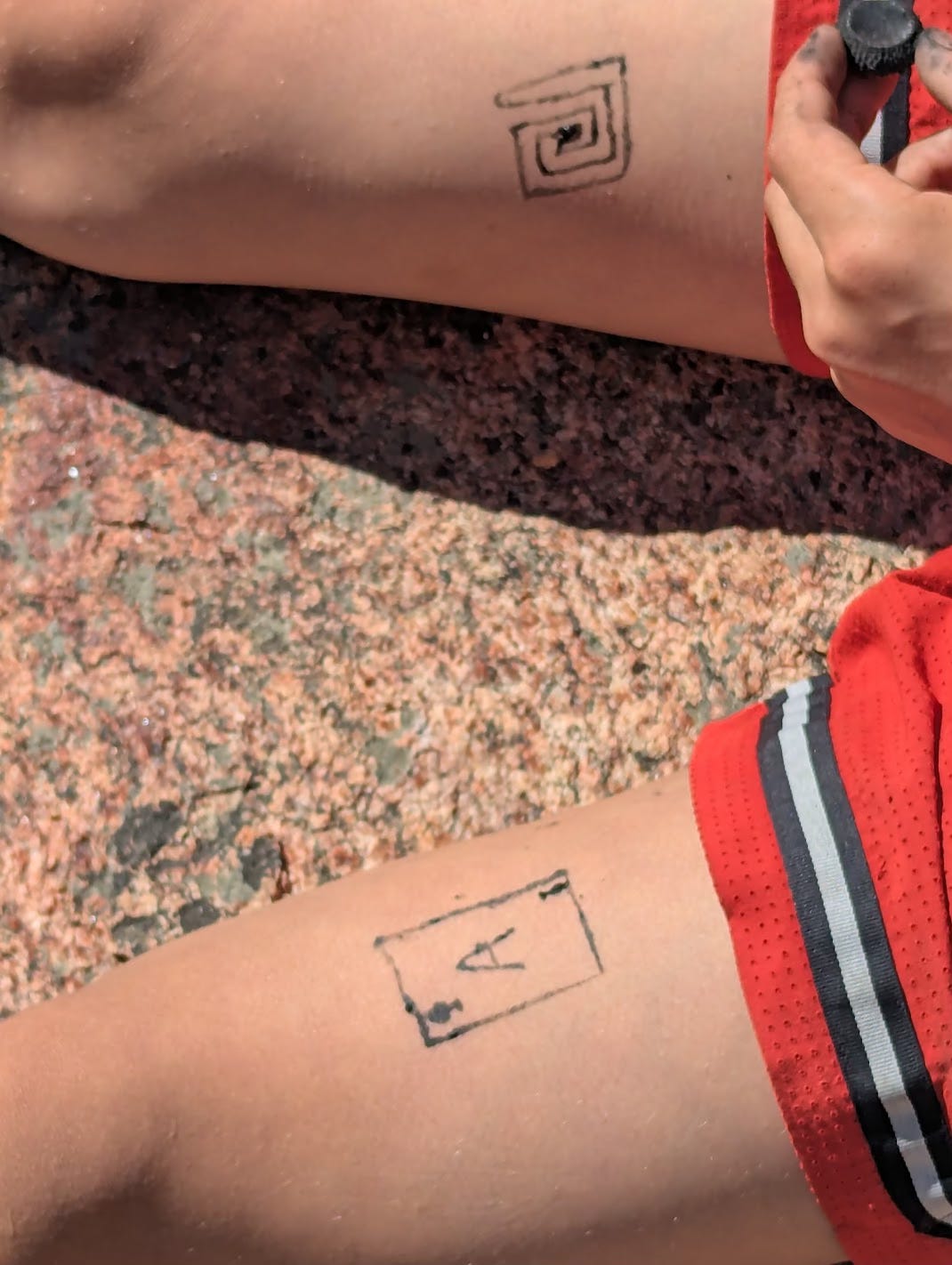
In the absence of natural dyes I had brought previously, one of our oldest, “D”. made charcoal ink and used it to tattoo (paint) designs on himself. Our youngest learned how from him. While giving tattoos to some of the rest of us, one of the kids notices that the veins on my hands are very prominent. This led to a great conversation about the impact of gender and age and the visibility of our veins.
At some point, one of the private fort boys (“E” and “O”) came back to Painted Rock to ask me if I would tell “A”, a girl the same age as “E” and “O”, to leave them alone. My simple response: “no” surprised both him and me. As no one seemed to be getting hurt, I didn’t see any need to intervene in that moment. Next week, I’m going to bring the issue up in opening circle and ask the boys and “A” to each present their points of view and then give the rest of the kids a chance to share theirs. An intervention, but at a different time and with voices other than my own.